May 2026
Rotational Jobs Abroad: Overseas Work...
Read →

Job boards still help, but only when you use the right ones and a smart strategy. Choose curated boards, look for clear pay and vetting, and pair listings with referrals or niche communities to actually land remote work. You will avoid waste by spotting boards that prioritize clicks over hires and by leaning on proof-based discovery like public work and warm introductions.

You will learn when job boards are worth your time, how they broke as they scaled, and what replaces them for remote roles. The article shows how to build a low-time, high-signal routine, what to ignore, and how to judge a platform’s quality so your search stops burning you out.

Job boards now flood you with low-quality listings, recruiter shortcuts, and endless noise that make finding real remote work harder. You need clarity on what wastes your time and how the platform’s incentives changed hiring outcomes.
Job boards aggregate thousands of roles daily. Many are duplicates, expired, or reposts from aggregators that never verify openings. You spend time sorting identical listings instead of finding unique, vetted remote job boards that lead to real interviews.
Search filters often promise precision but return broad results. Keyword matches pull in irrelevant postings, and applicant tracking systems (ATS) hide real requirements behind generic descriptions. That makes it hard to know if a listing fits your skills before you apply.
The volume attracts low-quality employers and recruiters who rely on numbers, not fit. When you see 200+ results for a role, the chance any single listing matches your experience drops quickly.
Some employers and agencies use job boards to collect resumes, not to hire. They post attractive titles to capture applications, then screen later or sell leads. You end up in databases without feedback or follow-up.
Recruiters sometimes post to build candidate lists for future roles. That creates slow response times and no clear hiring timeline. For remote hiring, where speed and clarity matter, this feels wasted.
Applicant tracking systems amplify the problem. They accept mass submissions, flag resumes, and rarely provide human context. You can apply dozens of times and never hear why you were rejected.
Repeated ghosting and automated rejections drain your energy. You tailor resumes and cover letters, then get no reply or one-line rejections from an ATS. That breaks trust in platforms that once offered straightforward matches.
You also face a time-cost problem. Sorting listings, customizing applications, and tracking responses eats hours without clear payoff. Remote job searches demand steady, focused effort; job boards often turn that effort into low-return busywork.
Finally, mixed signals from listings — fake salaries, unclear remote policies, and vague job scopes — make it hard to assess roles quickly. That uncertainty combined with poor communication from recruiters leads you to avoid job boards or use them only sparingly.
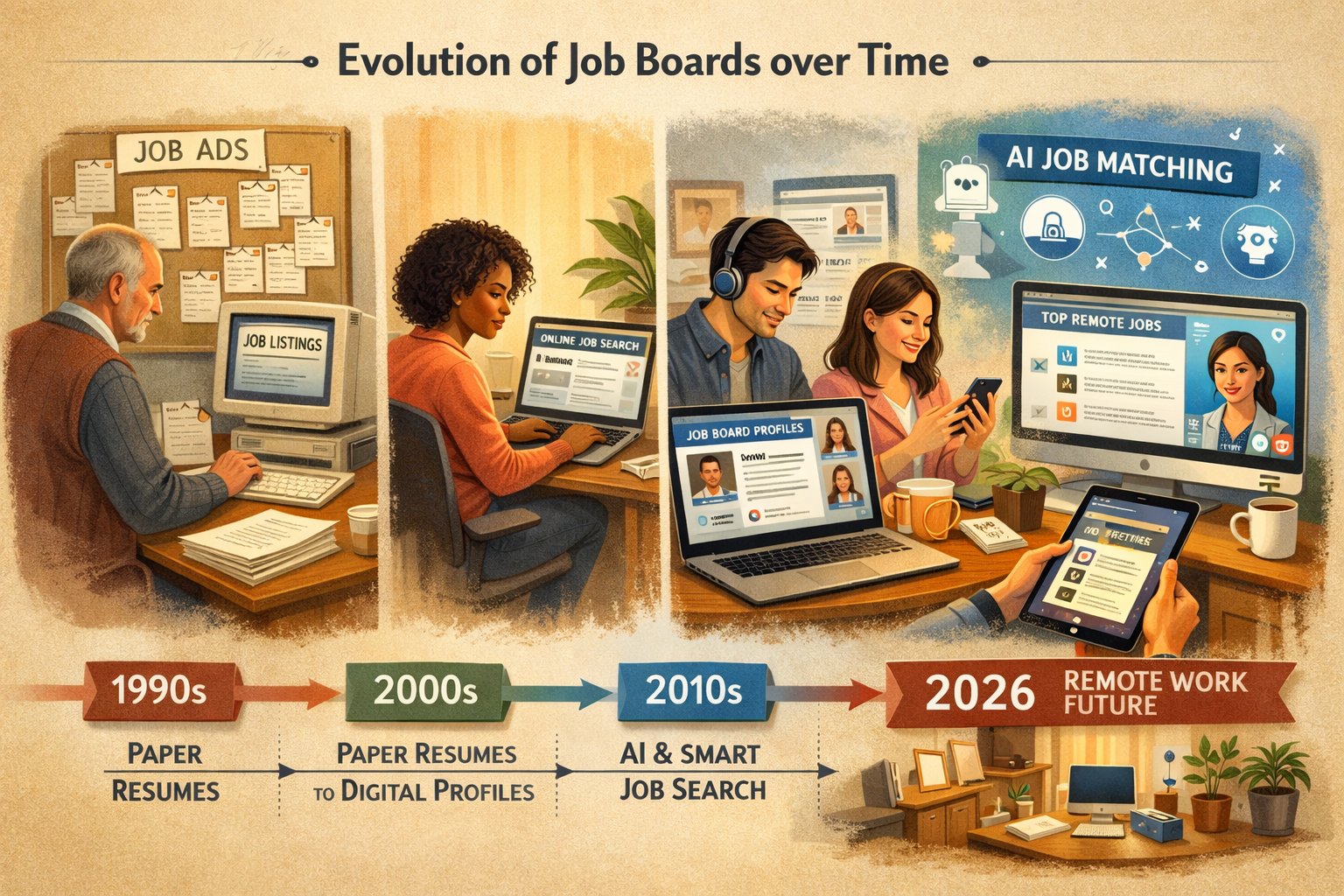
Job boards moved from small, community-driven listings to massive, automated feeds. This shift changed how you find jobs, how employers hire, and how much trust you can place in each posting.
Early job boards like Monster and niche community sites had fewer listings and closer ties to employers. You could often email a hiring manager directly or reach someone who actually read your resume.
Moderation was manual. Human reviewers and small editorial teams removed scams and repeated low-quality posts. That made signal higher and noise lower.
Employers paid to post fewer jobs, so each listing tended to represent a real opening. You learned which boards matched your field and returned to them regularly.
As sites grew, applicant tracking systems (ATS) and automated posting became standard. Employers pushed many openings into multiple boards at once. Aggregators and LinkedIn Jobs copied listings across platforms.
Scale brought more visibility but less curation. Job aggregators prioritized breadth, showing every link they could find. You started seeing duplicate posts, recycled roles, and generic descriptions.
Platforms optimized for clicks and impressions, not hire rates. That changed employer behavior: they posted widely, tracked click metrics, and often ignored lower-quality applicant flows.
When listings multiplied, verification lagged behind. Fake postings, resume farming, and recycled jobs proliferated because manual checks became costly at scale.
Applicant tracking systems reshaped hiring into a funnel you rarely saw. Many roles funneled candidates into opaque ATS forms where human review happened later, if at all. That reduced feedback and increased ghosting.
You now need filters and moderation to find real roles. Boards that never updated their review processes allowed low-intent employers to dominate, hurting candidate trust and making focused job hunting harder.
Job boards that still help you find real remote work focus on signal over volume. Look for platforms that filter employers, highlight verified pay, and connect you to communities or founders instead of anonymous listings.
Curated boards like FlexJobs and some niche boards keep listings hand-checked or paid-by-vetting. They charge employers or vet job posts, so you see higher-quality roles and clearer pay ranges. You’ll spend less time chasing dead links or ghosting employers.
Mass-market sites and aggregators such as Remote OK and We Work Remotely collect everything. That gives you more listings but also more noise: repeated posts, scams, and low-intent employers. Use mass platforms for market research, not for primary applications. For startups and product roles, check Wellfound (AngelList Talent) or niche boards where founders post directly.
Good filters go beyond keywords. Look for boards with:
Remote-first, seniority, and timezone filters matter for remote hiring. Remotive and FlexJobs let you filter by these criteria. Use salary filters to avoid hourly or low-paying gigs. Combine filters with company-size or funding-stage on Wellfound to aim at hiring priorities that match your needs.
Real moderation shows in the listing quality and in complaint mechanisms. Check whether the board:
Boards that publish moderation policies and remove repeat offenders cut down spam. Look for visible vetting badges or pay-verified tags on listings. If a site lets anyone post without review or keeps repeat duplicate listings, it’s optimizing for clicks, not hires. Choose platforms that make employer accountability clear and let you filter for verified postings.
Job boards can eat hours without yielding interviews when listings are low-quality, employers spam posts, or aggregators recycle the same role all over the web. Watch for signals that a site values clicks over real hires, allows unlimited employer spam, or simply republishes aggregator garbage.
You’ll notice click-driven boards by patterns in listings and site behavior. Listings often use vague titles like “remote developer” with no salary, location details, or company name. The site pushes “apply now” buttons and sponsored placements above genuine listings, which favors employers who pay for visibility rather than those who hire.
Search results flood with repeat posts and “urgent” tags that never age out. You’ll see many roles requesting broad skill sets with no clear responsibilities. If the board tracks clicks and shows ads tailored to your searches, it likely monetizes attention—not candidate outcomes.
Avoid boards that require no basic vetting or verification for employers. Those platforms generate lots of traffic but low interview rates for you.
Platforms that let anyone post create noise fast. You’ll find repeated listings from the same employer, freelance marketplaces posing as full-time jobs, and agencies recycling resumes into dozens of near-identical posts. These posts often link back to external application funnels that never reach a hiring manager.
Look for signs of spam: identical job descriptions, recruiter contact info only, requests for immediate submissions, and links to multi-step external forms. If a board contains thousands of similar posts from “remote” employers with vague company names, expect low-quality matches.
Prefer boards that require company verification, public company pages, or a minimum hiring fee. Those limits reduce spam and improve chances that your application reaches a real hiring team or an applicant tracking system that actually processes candidates.
Aggregators like Indeed pull listings from many sources, which sounds useful but creates duplication and stale posts. You’ll often apply to the same job multiple times through different entry points, confusing tracking and wasting your outreach energy. Aggregators also republish expired or low-quality listings scraped from company career pages and small boards.
This duplication hides the original source. You may miss employer-specific application instructions or the company career page where roles are updated. Aggregators can also funnel applicants into ATS systems without clear recruiter contact, leaving you unsure whether your resume was reviewed.
To avoid aggregator traps, cross-check listings on the company career page. Favor boards that link directly to verified company pages or show original posting timestamps. That keeps your applications targeted and prevents repeated submissions through disparate ATS entries.
These methods target quality over quantity. They help you connect with hiring founders, get warm introductions, and show real work instead of relying on noisy listings.
Join communities that focus on the kind of remote work you want—examples include product design Slack groups, indie hacker forums, and Y Combinator alumni channels. Founders in these spaces post roles directly when they need someone who already understands their stack or market. That means fewer generic listings and more roles at remote-first companies that value async work and clear culture fit.
Look for communities with active hiring threads, transparent compensation norms, and moderator enforcement. Platforms like Contra and specialized Discords often surface contract and full-time remote roles before they reach aggregators. Engage by sharing useful work samples and brief posts about what you do; founders notice practical contributions more than broad resumes.
Ask contacts for introductions to hiring managers at remote-first companies. A single warm intro can bypass automated screenings and get your skills in front of a recruiter who understands distributed culture. Reach out to former coworkers, people you’ve collaborated with on open-source projects, or alumni from accelerator networks like Y Combinator.
Be specific when you request introductions: name the role, state your relevant skills in one sentence, and include a short work sample link. Offer to draft the intro message to make it low-friction. Recruiters still trust referrals, and startups often prioritize candidates who come with a human endorsement over those from job-board spam.
Publish short, real work that proves you can produce value remotely. That can mean a GitHub repo, a case study on a Notion page, a public design critique, or a mini-project on Contra. Public work lets you control the narrative and makes it easy for hiring managers to assess fit quickly.
Share your work in niche channels and on LinkedIn with context—what you built, the impact, and how you collaborated remotely. Tag relevant communities or founders when appropriate. Employers at remote-first companies often hire candidates who demonstrate outcome-focused work rather than relying solely on resumes or job-board profiles.
Focus your time on high-signal actions: set precise job alerts, use resume tools to tailor one strong application, and spend saved time on referrals, niche communities, and interview prep that actually lead to interviews.
Set a weekly 60–90 minute routine focused on three tasks: check two curated job boards, scan three niche communities (Slack/Discord/Reddit), and update one tailored resume version. Use job alerts with exact keywords, location (remote), and salary ranges to cut noise. Apply only to roles that match 75% of core requirements and where salary or pay band is listed.
Automate simple work: use resume tools to swap bullets fast, and templates for cover notes. Save the time you get back for referrals, public work (GitHub, portfolios), and interview prep. Track actions in one spreadsheet or lightweight tool so you reuse what works.
Apply when listings include clear responsibilities, a salary range, and a named hiring contact or team. Prioritize roles posted by founder-led or curated boards, or jobs shared via warm intros. If a listing is vague, lacks pay info, or funnels you to a generic “apply here” form without recruiter details, skip it or flag it for later.
Walk away when employers ask for unpaid trials, ask you to fit unclear budgets, or post repeatedly with low-quality descriptions. Also walk away from high-volume aggregator posts with no moderation. Save applications for roles where you can add specific evidence of impact in the first message or resume section.
Track each application with these columns: source (board/community/referral), job title, date applied, resume version used, tailored bullets, first follow-up date, and interview outcome. Review weekly to spot trends: which boards convert, which resume version wins, and which outreach messages get replies.
Measure conversion rates: interviews per 100 applications and offers per interview. Use that to cut low-performing sources and double down on high converters like referrals and niche communities. Keep a short notes field for interview prep takeaways to improve future performance and reduce wasted prep time.
Check whether listings show clear pay, role details, and who the employer is. Look for active moderation, employer vetting, and tools that cut noise so you only spend time on real opportunities.
You should see salary ranges, pay type (hourly, salary, contractor), and location or remote type on every listing. Platforms that pull salary insights from Glassdoor, company career pages, or direct employer input give better signals. Listings that hide pay or say “competitive” create extra work for you and often mean the employer is low-commitment.
Also check whether job posts link to a company career page or a verified profile. Listings with a direct company URL, team descriptions, and a clear hiring stage tell you more about fit before you apply. If a board offers integrated salary data, note whether it cites sources like Glassdoor or employer-reported numbers.
Find boards that explain how they vet postings and who reviews new employers. Good platforms show a moderation policy, use human reviewers for suspicious posts, and remove roles that fail to meet minimum standards. Automated scraping without checks usually yields duplicate, outdated, or fake listings.
Look for visible indicators on listings: “verified employer,” date posted, and whether the post passed a manual review. Boards that publish takedown rates or moderation timelines give you confidence. If a site relies only on user flags to surface problems, expect more low-quality listings and wasted applications.
A worthwhile board blocks mass resume collection, recruiting agencies that spam, and employers that don’t follow up. Check whether employers must verify contact info or pay to post; pay-to-post can be good if combined with vetting, but pay-to-post without checks often favors volume over quality.
Inspect employer profiles for hiring history, response rates, and past listings. Some platforms show recruiter response metrics or allow you to filter out third-party recruiters. If a board aggregates every listing from the web without filtering, it will surface many low-intent employers; avoid those when you want real remote roles.
You need a mix of technical know-how, fast learning, and strong people skills to get noticed for remote roles. Focus on practical tools, clear results, and habits that show you can solve problems without daily supervision.
You should know how to use AI tools that speed up work, not just buzzwords. Learn prompt design, model limitations, and safe data handling so you can produce reliable drafts, code snippets, or analyses quickly. Practice with a few tools (one for writing, one for coding, one for data) and keep examples in your portfolio.
Adaptability means you can switch tools and workflows when teams change tech. Show that you can learn a new API or messaging workflow in days, not weeks. Mention specific wins: reduced task time by X% or shipped a feature using a new tool. That proves you use AI responsibly and effectively.
You must turn messy inputs into clear decisions. Know basic statistics, Excel/Sheets functions, and at least one data tool like SQL or Python for analysis. Create a small project that answers a real question—drop the dataset, queries, visuals, and a short write-up in your portfolio.
Technical competence also means reproducible work. Use simple scripts, clear file names, and short readme notes so employers can follow your steps. Highlight results with concrete metrics: conversion lift, time saved, or error reduction. Those numbers beat vague claims.
Remote work relies on trust and clear communication. Show you can read tone, give concise feedback, and resolve conflicts over async channels. Practice writing short status updates and structured meeting notes so others can act without back-and-forth.
Empathy helps you design better processes and keep teammates aligned. Point to times you improved team flow—e.g., set a weekly sync that cut blockers by half—or coaching examples where you helped a colleague learn a tool. Those stories show you work well with people even when you’re not in the same room.
This FAQ answers whether job boards still work, which sites and methods find real remote roles, why trust declined, and how to avoid low-quality listings and burnout. You’ll get clear signs to watch for and simple steps you can use right away.
Yes, but effectiveness varies a lot by board and role. Curated niche boards and some industry-focused sites still lead to interviews, while large aggregators often send low-signal leads.
Use boards that show pay ranges, have active moderation, and list hiring timelines. If listings are vague or posted hourly by many companies, expect low conversion rates.
Prioritize niche boards tied to your field, like developer, design, or writing communities. Look for founder-run or community-moderated sites where employers must pass screening.
Combine those with LinkedIn for networking, GitHub or Dribbble for public work discovery, and Slack/Discord communities where jobs are shared by members.
Mass aggregation, anonymous listings, and recycled posts reduced trust. Many boards focus on traffic and ads, not hiring outcomes.
Resume farming and recruiters posting spam roles also lowered signal. Lack of transparent pay and hiring steps makes it hard to judge listings.
Not entirely. Stop relying on them as your only channel. Use them as one part of a mixed strategy that includes referrals, public work, and community-based hiring.
If a board wastes more time than it gives interviews, drop it and track where your successful leads came from instead.
High-quality listings include clear pay ranges, location or timezone expectations, a hiring timeline, and a concise role description. They name a contact or hiring manager when possible.
Low-quality listings are vague, promise vague perks, recycle copy across roles, or require you to submit resumes with no screening steps. Watch for posts that urge immediate clicks or require forms before showing details.
Set a strict, short daily routine for job-board time, like 20–30 minutes for searching and one targeted application. Block unfocused browsing and turn off email alerts that flood you.
Track which boards produce real interviews and stop using the rest. Use templates for quick, personalized applications and focus on a few high-signal opportunities each week.