For Employers
Mar 2026
Clasva x Claude blog / journal templa...
Read →

Remote work keeps growing in 2026, and so do job scams. You want flexibility and fair pay, but fake listings often look real at first glance. A wrong move can cost time, money, or personal data.

You can tell the difference by checking how the company pays, communicates, and verifies itself, because real jobs never rush you, charge fees, or hide basic details. Legit listings show clear roles, real company info, and normal hiring steps. Scams push fast offers, vague tasks, and off-platform chats.
This guide shows you how to spot red flags, confirm real jobs, and avoid common traps. You will learn where real remote roles live and how to protect yourself before you apply.

Remote work keeps growing, and scammers move fast to follow it. They use better tools, copy real companies, and target stressed job seekers who want flexible work.
Remote hiring expanded across many fields in 2026. You now see more online-only roles with fewer interviews and faster offers. Scammers use this speed to push you to act before you verify details.
Cheap AI tools help scammers write clean job posts and emails. These messages look real and match your resume. Fake recruiters also copy real company names and staff profiles.
Economic pressure plays a role. Many people need extra income or flexible hours. Scammers target this need with promises of high pay and easy tasks.
Social media and messaging apps make scams spread faster. You can receive fake offers through direct messages, not just job boards. This makes scams harder to track and report.
Scammers reuse a few core methods, with small changes to avoid detection. The most common types in 2026 include:
| Scam Type | What You See | Key Warning Sign |
|---|---|---|
| Fake recruiter | Job offer after short chat | No video interview |
| Pay-to-start job | Fee for training or tools | Requests payment |
| Reshipping scam | Package handling at home | Uses your address |
| Check fraud | “Equipment” check sent | Asks you to refund part |
| Data harvesting | Forms for hiring details | Requests SSN early |
You may also see scams tied to crypto or gift cards. These often claim you will help test systems or process payments. Real employers do not pay this way.
Scams waste your time and energy during a job search. You may spend weeks on fake tasks or interviews. This slows your chance to find real work.
Financial loss remains a major risk. Some people lose money through fees, fake checks, or stolen wages. Others face bank issues after cashing bad checks.
Data theft causes long-term harm. Scammers collect your address, ID, or tax forms. You then face identity fraud months later.
Scams also affect trust. You may doubt real offers or avoid remote roles. This fear limits your options, even when good jobs exist.
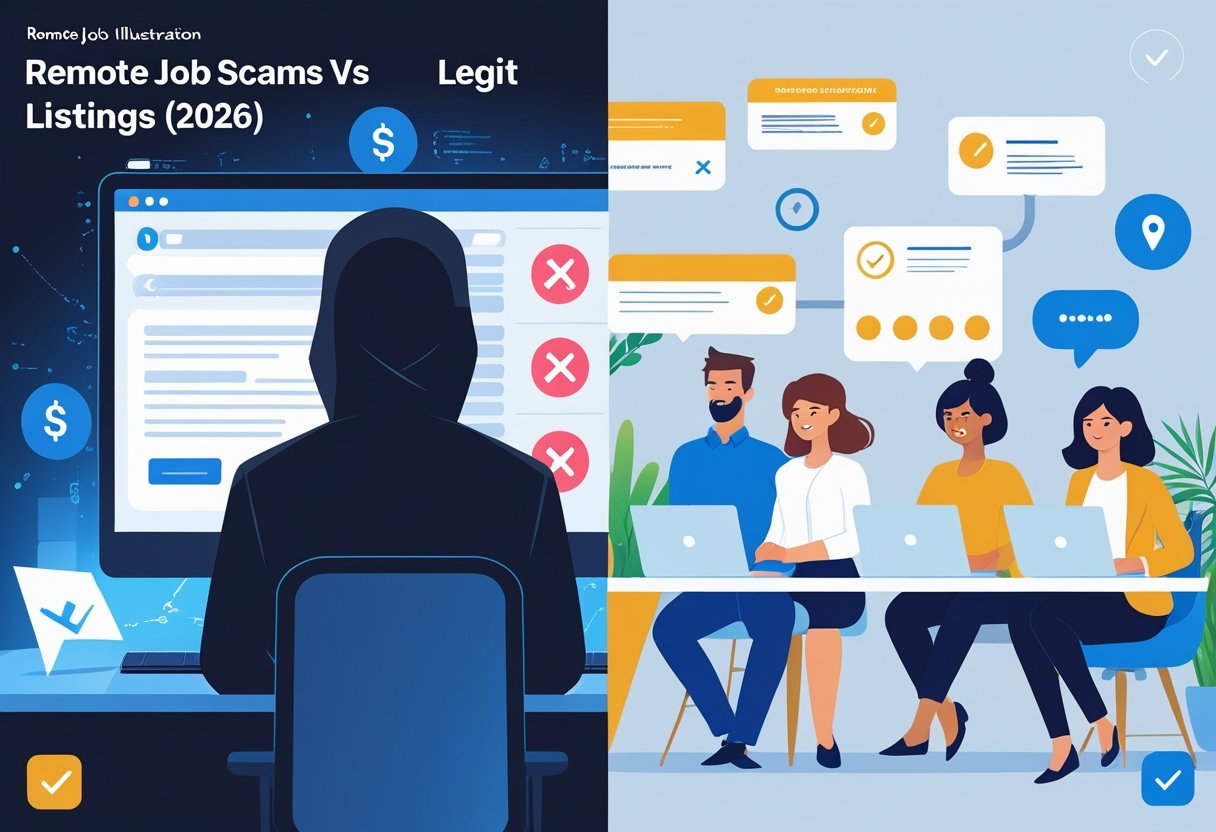
Legit remote jobs follow clear hiring steps and share verifiable details. Scams rush you, hide facts, and ask for money or sensitive data early.
You see clear job titles, pay ranges, and duties that match the role. The listing names the company and links to a real website with a matching domain email.
Legit employers use standard hiring steps. You apply through a form or email, interview by phone or video, and receive a written offer.
| Legit Listing | Common Scam |
|---|---|
| Company name and address listed | No company details |
| Interview before any offer | Offer without interview |
| Pay aligns with market rates | High pay for simple tasks |
| No fees to start | Requests for fees or gift cards |
You get time to review the offer. You never need to pay to work.
Scam job posts often share clear patterns that real employers avoid. You can spot them by looking closely at the job details, payment rules, and how the company contacts you.
Scam listings often skip clear job duties. You may see phrases like “simple online tasks” or “no experience needed” without explaining daily work. Legit jobs explain what you do, who you report to, and what tools you use.
Pay claims also raise concern. Scammers promise high pay for little effort, such as $50 per hour for basic data entry. Real listings match pay to skill and market rates.
Watch for these signs:
Real employers want the right fit. Scammers want quick replies.
Real jobs do not ask you to pay to work. Scammers often request fees for training, software, or background checks. They may say the fee is refundable, but you rarely see that money again.
Payment methods matter. Requests for gift cards, crypto, wire transfers, or cash apps signal trouble. These methods are hard to track and easy to abuse.
Common warning signs include:
Legit employers pay you. They do not route money through you.
Scammers use informal contact methods. You may receive job offers through text, WhatsApp, or Telegram with no prior interview. Real companies use email tied to their domain and follow a clear hiring process.
Check the sender details. Messages from free email accounts or misspelled domains often point to fraud. Poor grammar and rushed tone also stand out.
Look closely at these issues:
Professional employers communicate clearly and respect your time.
Scammers now copy real hiring steps to look credible. They rush the process, avoid live contact, and push you to share data or send money before real work starts.
You may get an interview by text, chat app, or email only. No video. No phone call. The questions feel generic, and the answers come fast.
Scammers often send an instant offer within hours. They skip references and skills checks. They may praise your resume without details.
Watch for these red flags:
Common data they target:
Legit employers verify skills first and never ask for money.
You can avoid most scams by checking the company’s history and how it hires. Real employers leave clear public records, pay market rates, and use normal interview steps.
Start with the company website. Check the domain age using a free lookup tool and confirm the site shows a real address, phone number, and staff names.
Look for a clear business footprint. Search state or national business registries, press mentions, and recent updates. A real company shows activity beyond a single job post.
Review the job details for accuracy. Legit listings name the manager, list clear duties, and explain pay and hours.
Red flags to watch for:
Check reviews on trusted sites. Look for patterns, not one-off comments. Consistent complaints about payment delays signal risk.
Use LinkedIn to confirm people and roles. The company page should list employees with normal work histories. Reach out politely to confirm the role exists.
Expect a standard interview process. Real employers use video calls, ask job-related questions, and give time to review an offer.
What legit interviews include:
Legit remote roles come from places that screen employers and limit low-quality posts. You save time by using sources that reduce scams and weak listings before you apply.
Most large job boards focus on volume. They let almost any employer post a role with little review.
This open model helps real companies hire fast, but it also lets scammers slip in. Fake recruiters can post jobs, collect resumes, and disappear.
You often see warning signs on these boards:
Job boards also earn money per post or per click. They have little reason to block low-quality listings unless users complain.
You can still find real jobs there, but you must filter hard. Without filters, you compete with bots and risk scams.
Curated remote boards review each employer before approving a post. Some check business records. Others require a paid listing.
This process removes many fake and low-effort jobs. It also limits reposted roles and resume harvesting.
Common traits of curated boards:
| Feature | Why It Matters |
|---|---|
| Manual review | Blocks fake companies |
| Paid employer posts | Reduces spam |
| Clear company profiles | Shows real teams |
| Fewer listings | Improves signal quality |
You see fewer jobs, but higher intent. Employers expect serious applicants and follow standard hiring steps.
Curated boards also focus on remote-first roles. You avoid “remote for now” jobs that later demand office work.
You control risk by filtering listings before you send a resume. Small checks save hours later.
Start with the company. Visit its site and look for:
Next, review the job post. Legit listings include:
Avoid listings that promise fast pay, skip interviews, or ask for fees. Do not apply if the recruiter pushes you to move off email right away.
Apply through the company site when possible. This step lowers scam risk and improves response rates.
You can lower your risk by choosing focused job sources, using salary rules, and checking employers before you apply. These steps help you spot red flags early and avoid wasted time or lost money.
High-volume job boards post thousands of roles each day. Scammers hide in that noise. Curated boards review listings before they go live, which removes many bad actors.
Use this checklist:
A focused board may show fewer roles, but each one has a higher chance of being real. You trade speed for safety, which helps in remote hiring.
| Board Type | Risk Level | What to Expect |
|---|---|---|
| High volume | Higher | More scams, less review |
| Curated | Lower | Fewer jobs, better checks |
Scammers avoid clear pay ranges. They rely on vague promises to lure fast replies. Real employers usually share a range to save time.
Follow these rules:
Transparent pay forces the employer to be specific. That makes scams harder to run. If a role hides pay but asks for quick action, move on.
Good sign: Pay range + location rules + job level.
Bad sign: No pay + urgent tone + easy money.
A real company leaves a trail. Scammers avoid details that you can verify.
Before you apply:
Take two minutes to verify basics. That small step blocks most scams. If the employer pushes you to chat apps or asks for personal data early, stop and report the listing.
Low-quality job boards often skip checks that protect you. They collect data with weak controls, fail to act on reports, and leave you on your own when scams appear.
Low-quality boards attract scammers because they ask for data without strong safeguards. You may see forms that request your full address, ID scans, or bank details before any interview. Scammers use these gaps to harvest data fast.
Protect yourself with strict limits. Share only what a real employer needs early on: name, email, and work history. Never send SSN, passport images, or payment info before a signed offer.
Use basic defenses:
If a board lacks these basics, scammers notice—and move in.
Scammers prefer boards that ignore reports or hide the report button. When reports go nowhere, bad listings stay live and attract more victims.
Act fast when you spot red flags. Look for jobs that promise high pay for simple tasks, push urgent deadlines, or ask you to move to chat apps right away.
Report with clear details:
Good boards remove listings within days and warn other users. Poor boards do not respond or delete reports. Your report still matters. It creates a record that helps others avoid the same trap.
If a scam targets you, stop contact at once. Do not argue or try to recover money through the scammer.
Take these steps in order:
Use official channels next:
Low-quality boards rarely help after the fact. Your quick action limits damage and cuts off future attempts.
Remote job scams often share clear warning signs, while real offers follow normal hiring steps. You can reduce risk by checking employers, using trusted sites, and protecting your personal data.
Scams often promise high pay for simple tasks with no interview. They may rush you to accept and avoid video calls.
Requests for upfront fees, gift cards, or crypto payments signal fraud. Real employers do not ask for money to hire you.
Poor grammar, fake company emails, and messages sent only through chat apps also raise concern.
Check the company website and confirm the job appears there. Match the contact email to the company domain.
Search for the company on LinkedIn and review employee profiles. Look for a real hiring manager tied to the role.
Ask for a written offer after a live interview. Legit employers explain pay, duties, and start dates clearly.
Stop responding and do not share more information. Save messages, links, and payment requests as evidence.
Report the listing to the job board where you found it. You can also file a report with the FTC at reportfraud.ftc.gov if you are in the U.S.
Warn others by posting a brief note on forums or review sites. Keep your message factual.
Use LinkedIn to confirm company size, staff, and activity. Check Glassdoor and Indeed for reviews and salary data.
Search the company name with “scam” or “review.” Visit the Better Business Bureau for U.S.-based companies.
For global checks, use OpenCorporates to confirm business registration.
Remote scams rely more on messaging apps and email-only contact. Traditional scams often use phone calls or in-person meetings.
Remote scams push quick onboarding without interviews. They may send fake checks for equipment and ask for refunds.
The distance makes identity checks harder, so scammers move faster.
Use a separate email for job applications. Limit shared details to what the application requires.
Follow a simple checklist:
Trust your judgment and pause if anything feels off. Legit employers respect careful candidates.